Have you heard of yoji jukugo? Piece of cake, break the ice, and cut corners – these are all short idioms we use all the time, and in Japan, they have something similar called 四字熟語 (yojijukugo). A yojijukugo is a Japanese phrase consisting of four kanji. Just like in English, yojijukugo are very popular since they capture complex life experiences or ideas in just a few convenient words or characters. The main difference is that yojijukugo consists of strictly four kanji, no more, no less. The form itself is part of the definition
Yojijukugo is a great way to go beyond bland direct language and incorporate idiomatic, figurative language into your Japanese. So, let’s dive into what they are, how they work, and what are some common yojijukugo to know!
What is 四字熟語 (Yojijukugo)?
四字熟語 (yojijukugo) are expressions consisting of four kanji characters. They can be translated into English as “4-character idioms.” They are a string of characters that, when used together, create symbolic prose, or even poetry, allowing this handful of characters to convey greater depth and meaning despite only consisting of 4 words. However, yojijukugo do not always have to be idiomatic; some phrases considered to be yojijukugo only carry literal meanings.
The name of 四字熟語 (yojijukugo) itself is a yojijukugo that is non-idiomatic, just literally meaning “4 character idioms.”
- 四 means “four,” read here as yo — the native Japanese reading used in compound counting contexts, though shi is the Sino-Japanese reading.
- 字 (ji) means “character” or “letter,” referring specifically to a written kanji, so 四字 (yoji) together means “four characters.”
- 熟語 (jukugo) means “compound word” or “set phrase” and is the most interesting piece. 熟 (juku) carries the sense of something “ripe,” “mature,” or “well-practiced”. 語 (go) simply means “word,” “language,” or “speech.”
Another common literal 4-character phrase that can be considered a yojijukugo is 屋内禁煙 (okunai kin en), meaning “no smoking indoors.” But for the most part, yojijukugo are idioms used as convenient, bite-sized phrases to describe complex life situations. They are used in both written and spoken Japanese, are common in conversation, often referenced in popular culture, and are even popular Japanese proverbs.
Basic Structure of Yojijukugo (四字熟語)
Yojijukugo are known for their aesthetic and well-balanced structure and repetition. They are like poetry, where the rhythm, balance, and contrasts of sounds are just as important as the meaning being conveyed. While there are no set rules, it is common for yojijukugo to have a two-part structure, where the 4 characters are broken down into 2 pairs.
For example, in the idiom, 一攫千金 (ikkaku senkin), the first pair 一攫 (ikkaku) means one stroke, then the second pair 千金 (senkin) means “1000 gold.” The first part, describing something small like a single stroke, contrasts with the second, describing something grand like 1000 gold, to create a dramatic effect. The whole phrase taken together means “make a fortune with a single stroke.”
Some of the most common yojijukugo incorporate numbers, like in the example we just described, which uses numbers 1 and 1000 to create a contrast. It’s common to use the same number but with 2 different things to also create a similar juxtaposition. For example, 十人十色 (juunin to iro), which means 10 people, 10 colors, uses the number 10 with people and colors to express how everyone is different. It is similar to the English expression “different folks, different strokes.”
There are also yojijukugo, which wouldn’t necessarily follow a 2-part structure. Likely the most obvious example that comes to mind would be 已己巳己 (ikomiki), which are kanji characters with completely different meanings but are visually very similar. So, this yojijukugo means “all the same.”
So, there is a wide variety of yojijukugo, consisting of numbers and different structures. But they all must consist of only 4 kanji characters.
History of Yojijukugo (四字熟語)

Yojijukugo have their roots in classical Chinese literature, where they developed from Chinese idioms called 成語 (chengyu). Chengyu are also four-character expressions used to convey complex ideas, morals, or historical lessons in a compact, bite-sized phrase.
From the 5th to the 8th centuries, considered pivotal in defining Japanese culture, Japan was greatly influenced by China, importing Chinese art, philosophy, Buddhism, and scholarship. During this time, educated Japanese scholars studied classical Chinese texts, such as the Analects of Confucius, historical chronicles, and philosophical writings. Many of the idioms found in these works were adopted into Japanese vocabulary and eventually became what we now call yojijukugo.
Because of this influence, many yojijukugo come directly from ancient Chinese stories or philosophical ideas. For example, there are idioms that originate from a historical anecdote about a famous general, a Confucian teaching about morality, or a Buddhist lesson about life.
However, not all yojijukugo come from China. Over time, Japan also developed its own distinct four-character expressions. Some stemmed from different proverbs or were simply created by combining kanji in a meaningful way.
Today, yojijukugo appear frequently in literature, newspapers, speeches, and everyday conversation. Because they condense complex ideas into just four characters, they are often used to sound concise, intellectual, or poetic.
Types of Yojijukugo
Yojijukugo encompasses thousands of four-character compounds, and unlike Japanese wordplay and puns (called dajare), there isn’t necessarily a fixed number of types. However, we can broadly break them down into non-idiomatic and idiomatic yojijukugo.
1. Non-idiomatic yojijukugo
Non-idiomatic yojijukugo are compounds whose meaning is entirely transparent, meaning the whole is simply the sum of its parts.
For example, the word 屋内禁煙 (okunaikinen) literally means “no smoking indoors”, made up of 屋 (oku, building), 内 (nai, inside), 禁 (kin, prohibited), and 煙 (en, smoking). The meaning is immediately clear with no idiomatic reading required.
2. Idiomatic yojijukugo
By contrast, several thousands of yojijukugo are true idioms, in the sense that they carry a particular meaning that cannot be deduced from the literal meanings of their component characters alone. For example, the yojijukugo 一期一会 (ichigo ichie) breaks down as 一 (ichi, one), 期 (go, period of time), (ichi, one), and 会 (e, meeting or encounter).
Read literally, it means “one time, one meeting,” which makes sense, but its true idiomatic meaning runs much deeper: the idea that each encounter between people is unique and will never occur again, in exactly the same way, and should therefore be treasured.
When Do We Use Yojijukugo?
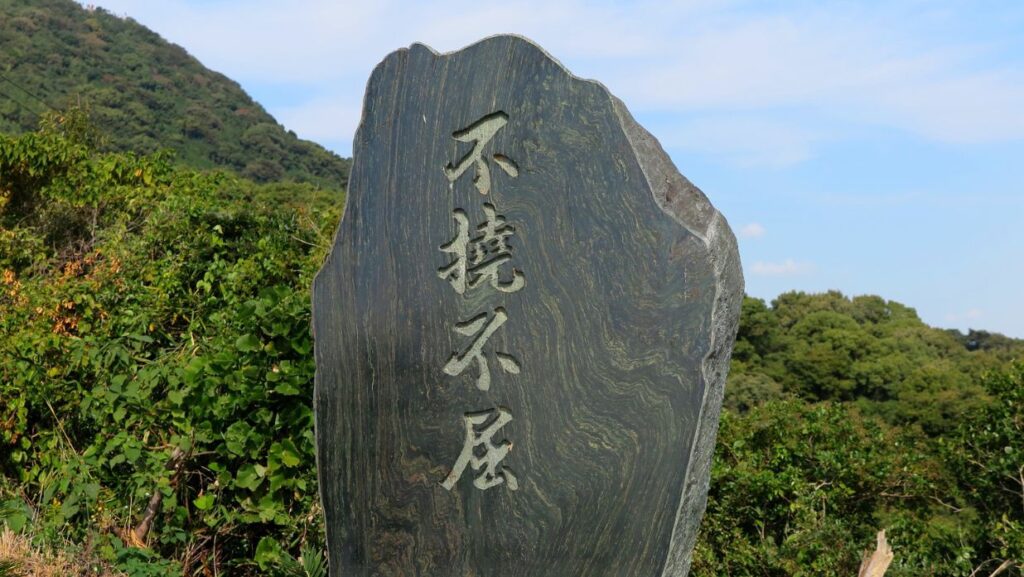
Though some yojijukugo are idioms, the non-idiomatic ones appear across a wide range of contexts in Japanese life, from formal writing to everyday conversation. The reason is that a single four-character compound can replace an entire explanatory phrase, which suits the Japanese preference for concision in formal contexts. For example, to describe the relationship between the United States and Japan, news outlets and media can use the term 日米 関係 (nichibeikankei), built from nichi (Japan), bei (U.S.), and kankei (relations).
In everyday conversation, the more well-known compounds slip into casual speech naturally. Phrases like 一石二鳥 (isseki nichou, “kill two birds with one stone”) or 七転八起 (shichi ten hakki, “fall seven times, rise eight”) are used by ordinary speakers of all ages, much like common proverbs in Japanese.
Most Popular Yojijukugo (四字熟語)
So let’s explore some of the most common yojijukugo you may encounter in daily life or Japanese media. This list contains practical idioms you can easily add to your Japanese arsenal to spice up your language with idiomatic flair.
A big part of yojijukugo is the use of kanji! But kanji is notoriously hard to remember, so check out our guide to help you remember kanji more easily with radicals!
1. Isseki Nichou (一石二鳥)
Pronunciation: Isseki nichou
Translation: One stone, two birds
Meaning: Accomplishing two things with one action (the same as “kill two birds with one stone”).
Example Sentence:
運動しながら友達と話せるので、一石二鳥ですね。
Undou shinagara tomodachi to hanaserunode, isseki nichou desune.
I can exercise while chatting with my friend, so it’s killing two birds with one stone.
2. Juunin Toiro (十人十色)
Pronunciation: Juunin toiro
Translation: Ten people, ten colors
Meaning: Everyone has different tastes, personalities, or opinions.
Example Sentence:
好みは十人十色です。
Konomi wa juunin toiro desu.
Everyone has different preferences.
3. Ikudouon (異口同音)
Pronunciation: ikudouon
Translation: Different mouths, same sound
Meaning: Everyone saying the same thing; unanimous agreement.
Example Sentence:
みんなが異口同音にその映画をおすすめした。
Minna ga ikudouon ni sono eiga o osusume shita.
Everyone recommended that movie.
4. Onkochishin (温故知新)
Pronunciation: Onkochishin
Translation: Learn the old, know the new
Meaning: Studying the past helps us understand new ideas or gain new knowledge.
Example Sentence:
歴史を学ぶことは温故知新につながります。
Rekishi o manabu koto wa onkochishin ni tsunagarimasu.
Studying history helps us gain new insights into the past.
5. Jigou Jitoku (自業自得)
Pronunciation: Jigou jitoku
Translation: One’s own actions, one’s own result
Meaning: You bring the consequences upon yourself; you reap what you sow.
Example Sentence:
勉強しなかったから試験に落ちた。自業自得だね。
Benkyou shinakatta kara shiken ni ochita. Jigou jitoku da ne.
You didn’t study and failed the exam. You brought it on yourself.
Want to study Japanese with us?
6. Kishikaisei (起死回生)
Pronunciation: Kishikaisei
Translation: Wake the dead and return to life
Meaning: A dramatic comeback or recovery from a desperate situation.
Example Sentence:
チームは最後に起死回生のゴールを決めた。
Chiimu wa saigo ni kishikaisei no gooru o kimeta.
The team scored a dramatic comeback goal at the end.
7. Denkousekka (電光石火)
Pronunciation: denkousekka
Translation: Lightning and sparks
Meaning: Extremely fast; something done with lightning speed.
Example Sentence:
彼は電光石火のスピードで走り出した。
Kare wa denkousekka no supiido de hashiridashita.
He started running at lightning speed.
8. Ishin Denshin (以心伝心)
Pronunciation: Ishin denshin
Translation: From one heart to another
Meaning: Understanding each other without speaking; communicating through mutual understanding.
Example Sentence:
長い付き合いだから、以心伝心だ。
Nagai tsukiai dakara, ishin denshin da.
We’ve known each other so long that we understand each other without words.
9. Rinki Ouhen (臨機応変)
Pronunciation: Rinki ouhen
Translation: Adapt to the situation
Meaning: Being flexible and responding appropriately to changing circumstances.
Example Sentence:
問題が起きても臨機応変に対応してください。
Mondai ga okite mo rinki ouhen ni taiou shite kudasai.
Please respond flexibly even if problems occur.
10. Shichiten Hakki (七転八起)
Pronunciation: Shichiten hakki
Translation: Fall seven times, stand up eight
Meaning: Never giving up despite repeated failures.
Example Sentence:
人生は七転八起だ。
Jinsei wa shichiten hakki da.
Life is about getting back up again and again.
11. Akuin Akka (悪因悪果)
Pronunciation: Akuin akka
Translation: Evil cause, evil result
Meaning: Bad actions bring bad results; you reap what you sow.
Example Sentence:
悪いことばかりしていると、悪因悪果になりますよ。
Warui koto bakari shite iru to, akuin akka ni narimasu yo.
If you keep doing bad things, bad results will follow.
12. Ichigo Ichie (一期一会)
Pronunciation: Ichigo ichie
Translation: One lifetime, one meeting
Meaning: Every encounter is unique and should be treasured, because it may never happen again.
Example Sentence:
旅行で出会う人との時間は一期一会だと思います。
Ryokou de deau hito to no jikan wa ichigo ichie da to omoimasu.
I think the time you spend with people you meet while traveling is a once-in-a-lifetime experience.
13. Isshin Ittai (一進一退)
Pronunciation: isshin ittai
Translation: One step forward, one step back
Meaning: A situation that alternates between progress and setbacks.
Example Sentence:
交渉は一進一退の状況が続いています。
Koushou wa isshin ittai no joukyou ga tsuzuite imasu.
The negotiations are continuing with progress and setbacks.
14. Suisei Mushi (酔生夢死)
Pronunciation: suisei mushi
Translation: Drunken life, dreamlike death
Meaning: Living aimlessly without purpose, as if drunk or dreaming.
Example Sentence:
目標もなく毎日を過ごすのは酔生夢死のような人生だ。
Mokuhyou mo naku mainichi o sugosu no wa suisei mushi no you na jinsei da.
Living every day without goals is like a life spent drifting aimlessly.
15. Denkousekka (電光石火)
Pronunciation: denkousekka
Translation: Lightning and sparks
Meaning: Extremely fast; doing something with lightning speed.
Example Sentence:
彼は電光石火のスピードで走り出した。
Kare wa denkousekka no supiido de hashiridashita.
He started running at lightning speed.
16. Mikkabouzu (三日坊主)
Pronunciation: mikkabuozu
Translation: A monk for three days
Meaning: Someone who gives up quickly or quits at the first sign of difficulty.
17. Kachoufuugetsu (花鳥風月)
Pronunciation: kachoufuugetsu
Translation: Flower, bird, wind, moon
Meaning: Appreciating the beauty of nature and finding deeper reflection through it. More poetic than anything else, this one means to experience the beauties of nature, and in doing so, learn about yourself.
18. Ichinichi Ippo (一日一歩)
Pronunciation: ichinichi ippo
Translation: One day, one step
Meaning: Progress happens little by little; moving forward slowly but surely.
Conclusion: Try Using 四字熟語 (Yojijukugo) in Japanese Conversation!
四字熟語 (yojijukugo) are convenient, four-character phrases that capture often complex life lessons, morals, or common everyday experiences into a short, convenient expression. They are often idiomatic, even a bit poetic, and are tons of fun to say. They are a great way to add more flavor to your Japanese with their use of metaphors and symbols, and are shortcuts to expressing more complicated ideas. Like the yojijukugo goes, 一石二鳥 (isseki nichou), or two birds with one stone!
So try to remember at least 5 from this list and use them next time you talk in Japanese to impress your friends or Japanese teacher!
Learn Japanese at Coto Japanese Academy
To really sound more like a native, such as using more idiomatic language, you should practice Japanese with Japanese teachers who can guide and coach your language skills. We offer conversation-focused classes as well as classes that can grow your reading and writing skills. We have campuses in Minato, Iidabashi, Shibuya, and Yokohama, and we will soon open a new campus in Shinjuku!
We also offer courses completely online, so you can take Japanese with our trained native Japanese instructor, no matter where you are in the world! Interested? Sign up with the form below!
FAQ
What are 四字熟語 (yojijukugo)?
四字熟語 (yojijukugo) are Japanese idiomatic expressions made up of four kanji characters. These bite-sized phrases often convey a complete idea, moral lesson, or descriptive concept in just four characters. Because of their concise structure and rhythmic balance, they are often compared to short poetic expressions.
How many yojijukugo are there?
There is no exact number, but dictionaries generally list several thousand yojijukugo. Some estimates suggest there are over 4,000 expressions in total. However, only a few hundred are commonly used in everyday Japanese, with many appearing mainly in literature, academic writing, or traditional contexts.
Where do yojijukugo come from?
Many yojijukugo originate from classical Chinese idioms called 成語 (chéngyǔ). These expressions often come from historical stories, philosophical teachings, or ancient texts. Over time, Japan adopted many of these idioms and incorporated them into the language. Japan also created its own four-character expressions using kanji.
Do all yojijukugo come from Chinese?
While many yojijukugo come from Chinese classics and historical anecdotes, Japan strayed from their original Chinese source and created tons of its own yojijukugo.
Are yojijukugo used in everyday Japanese?
Yes, there are plenty of yojijukugo that are used a lot in everyday Japanese conversation and are often referenced in pop culture, like in anime. Certain expressions, such as 一石二鳥 (isseki nichou) meaning 2 birds with one stone or 十人十色 (juunin juuiro), 10 people 10 colors, are commonly used in conversation. They also often appear in formal writing, speeches, literature, or news articles.
You may also be interested in:
- 23 Japanese Swear Words & Profanity You Shouldn’t Use
- 23 Trickiest Japanese Tongue Twisters To Try
- 20 Japanese Superstitions Explained: Good & Bad Omens
The post Yojijukugo (四字熟語): Japanese 4-Character Idioms appeared first on Coto Japanese Academy.
Article source: https://cotoacademy.com/japanese-yojijukugo/