Golden Week, or Oogata Shuukan, in Japan, is the period when four national holidays cram together and form an (almost) week-long break. This is when inbound travel peaks in Japan, as a lot of people use this opportunity to use their paid time off to visit other places in the country. People living in urban centers like Tokyo will usually leave the city at the beginning of the week. Trains, airports, and tourist spots can get very crowded, too. Overall, the Golden Week is Japan’s third busiest holiday season, following Oshougatsu (New Year) and Obon week, which falls in mid-August.
If you don’t live in Japan, “Golden Week” might sound unfamiliar. We’ll discuss all you need to know about the season and what to expect.
What is Golden Week?
The Golden Week actually comprises four different national holidays congregating around the same dates, creating an almost week-long break. So, the holidays are as follows:
| English | Japanese | Date |
|---|---|---|
| Showa Day | 昭和の日 | April 29 |
| Constitution Memorial Day | 憲法記念日 | May 3 |
| Greenery Day | みどりの日 | May 4 |
| Children’s Day | こどもの日 | May 5 |
Since these holidays fall so close together, they make up almost a 5-day break. Usually, when there is a gap between one national holiday and the next one, people working in Japan will take a day off to make it a full seven-day holiday. Some companies might even be generous enough to close all business operations the whole week of the holidays to allow their employees free time off.
When is Golden Week?
Generally, Golden Week starts from Showa Day on April 29th and ends with Children’s Day on May 5th. However, if any of the holidays fall on a weekend, the actual observation (or day off) will be moved to a workday. So, let’s see when Golden Week will be observed for the next few years.
Golden Week 2026:
Golden Week 2026 falls between April 29th and May 6th.
| Holiday | Date | Day |
|---|---|---|
| Showa Day | April 29 | Wednesday |
| Weekend | May 2 | Saturday |
| Constitution Memorial Day (Actual) | May 3 | Sunday |
| Greenery Day | May 4 | Monday |
| Children’s Day | May 5 | Tuesday |
| Constitution Memorial Day (Observed) | May 6 | Wednesday |
Golden Week 2027:
Golden Week 2027 falls between April 29th and May 5th.
| Holiday | Date | Day |
|---|---|---|
| Showa Day | April 29 | Thursday |
| Weekend | May 1 | Saturday |
| Weekend | May 2 | Sunday |
| Constitution Memorial Day | May 3 | Monday |
| Greenery Day | May 4 | Tuesday |
| Children’s Day | May 5 | Wednesday |
Golden Week 2028:
Golden Week 2028 falls between April 29th and May 5th.
| Holiday | Date | Day |
|---|---|---|
| Showa Day | April 29 | Saturday |
| Weekend | April 30 | Sunday |
| Constitution Memorial Day | May 3 | Wednesday |
| Greenery Day | May 4 | Thursday |
| Children’s Day | May 5 | Friday |
Days of the Golden Week
Each of the four holidays has its own unique history. If you would like to know more, then check out some of these articles!

Showa Day: Shouwa no Hi (昭和の日)
Showa Day, or 昭和の日 (shouwa no hi), usually falls on April 29th and is recognized as the start of Golden Week. It is meant to contemplate the events of the Showa era (1926-1989), which was governed by the late emperor, Hirohito. The origins of Showa Day are relatively confusing because it is closely connected with two other holidays: The Emperor’s Birthday and Greenery Day. The date of the Emperor’s Birthday changes when a new emperor ascends to the Chrysanthemum Throne, and it was from these new enthronements that both Showa Day and Greenery Day were born.
Showa Day was decided to be on April 29th since that was Emperor Showa’s birthday, after whom the era is named. There is no actual celebration for Showa Day other than to take a day to rest and perhaps contemplate the Showa era. But you might be able to catch public lectures about the Showa era and Japanese history.

Constitution Memorial Day: Kenpou Kinenbi (憲法記念日)
The Constitution Memorial Day, or 拳法記念日, commemorates the declaration of Japan’s postwar constitution. The post-war constitution was signed on May 3rd, 1947, so the holiday falls on this date every year, but its actual observation could vary depending on whether the holiday ends up on a weekend. To celebrate this historical landmark, the Japanese population receives a day off for the Constitution Memorial Day, as part of the larger Golden Week Holiday.
The signing of Japan’s post-war constitution was both a documented, legal and symbolic progression towards democracy. The constitution declared Japan to be a pacifist nation and secured essential workers’ and human rights that are strictly protected to this day. While most people use this holiday during the Golden Week to visit family or travel, many Diet buildings are open to the public, and you can even catch public lectures about Japan’s history and WWII in different metropolitan areas.

Greenery Day: Midori no Hi (みどりの日)
Greenery Day, or 緑の日, is a celebration of nature, the environment, and the great outdoors. It falls on May 4th every year, sandwiched right in the middle of Golden Week, though its observation may shift if it lands on a weekend. The holiday has an interesting history; it originally fell on April 29th as a way to honor Emperor Showa, who had a deep love of nature, before being moved to May 4th in 2007 when April 29th was redesignated as Showa Day.
The day is meant to celebrate nature by simply enjoying the outdoors and being in nature. Many parks and botanical gardens across Japan offer free admission on this day. Families often take advantage of this with picnics, hikes, and outdoor festivals at these parks. There are also colorful parades through larger cities, and streets are decorated with paper lanterns.
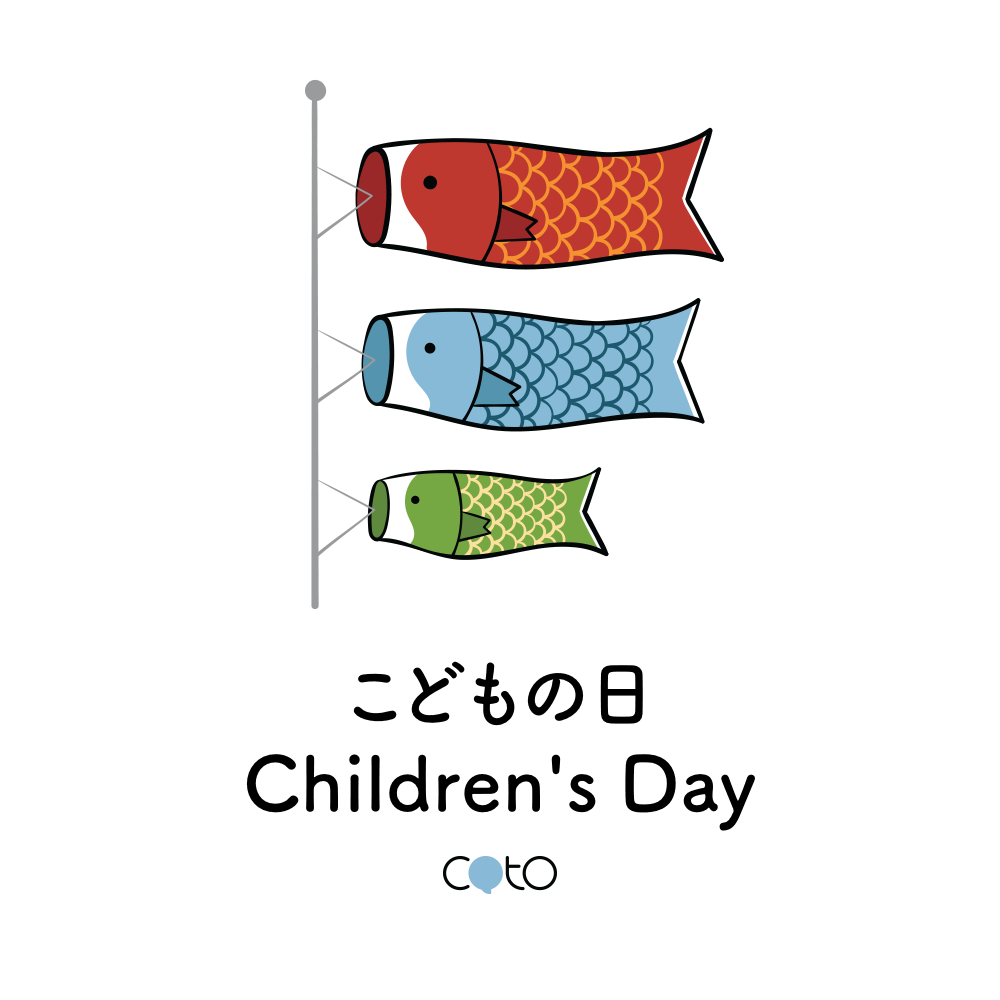
Children’s Day: Kodomo no Hi (こどもの日)
Children’s Day, or こどもの日 (kodomo no hi), falling on May 5th, is a day to commemorate the happiness and well-being of children, while also honoring parents and giving thanks to mothers. The day has an interesting history strongly connected to China. Perhaps the most visible proclamations of Children’s Day are the elegant flying koinobori (carp-shaped windsocks) that adorn household roofs throughout Japan. These streamers originate from the Chinese legend, which claimed that the perseverance and strength of an upstream swimming carp will transform it into a dragon.
Each carp streamer also represents a family member, with the largest black carp symbolizing the father, the red one the mother, and smaller, colorful ones representing each child. Families also traditionally display warrior dolls, or gogatsu ningyo, representing protection and good fortune for their children. Also, be sure to try the Kashiwa-mochi, which is a rice cake wrapped in oak leaves, as it’s a popular treat during Children’s Day!
Silver Week
Silver Week, much like Golden Week, is a collection of holidays that could lead to an extended 5-day holiday. It occurs in September. This may sound strange because there are only two public holidays in September, so how do you get a 5-day holiday? Japan actually has a law that states that if any working day lies between two national holidays, that working day is converted to a national holiday. This new holiday is called a Citizen’s holiday, or 国民の休日 (Kokumin no kyuujitsu). For more details, check out our guide to Silver Week.
If everything works out, the two holidays will be apart by one day and be right next to the weekend. This is incredibly rare, though, and the next time this is going to happen is in 2026. The holidays in Silver Week are:
| English | Japanese | Date |
|---|---|---|
| Respect for the Aged Day | 敬老の日 | 3rd Monday of September |
| Autumnal Equinox Day | 秋分の日 | September 22/23* |
| Citizen’s Holiday | 国民の休日 | In-between the other holidays |
*Autumnal Equinox Day’s date is dependent on the date of Southern Equinox in Japan, which can vary every year. Typically, it will fall on September 23
Want to see a list of more Japanese holidays? Check out our article on Japanese holidays.
Traveling During Golden Week: Is it Worth It?
Golden week is one of the few lengthy national holiday breaks, so with strategic use of PTO, you could have a pretty long vacation. However, if you’re going to travel domestically in Japan, expect swarms of crowds and marked-up prices at most of the popular tourist destinations. On top of that, transportation, accommodation, entertainment, and theme parks will likely be sold out weeks, if not months, in advance, since everyone else has the same days off and will be travelling. So, how can you make the most out of your Golden Week Holidays?
Make Plans & Reservations in Advance
If you want to travel domestically, making plans and reservations well in advance is not only recommended, it might even be essential if you want to travel in Japan at all. If you make reservations as far in advance as possible, prices might be lower because there’s plenty of availability for different accommodations and activities. Once it’s even a month before Golden Week, prices will likely surge, and availability will be scarce. So, by planning, you can lock in reservations, save money, and time!
Travel Out of Japan
Since Golden Week is one of Japan’s longest national holidays, domestic travel destinations will be overcrowded and overpriced, so this is a great chance to travel abroad instead. However, keep in mind that during Golden Week, overseas flights from Japan might still be priced higher than usual, but you won’t have to deal with the crazy crowds or overpriced accommodations or entertainment, plus there will probably be much more availability for restaurants, hotels, and everything you want to do. So, what are some popular overseas destinations that are reasonable price from Japan during Golden Week?
1. South Korea
South Korea is close, affordable, and has plenty to offer in terms of food and entertainment. The capital, Seoul, is easy to get to from Japan and is chock-full of world-class food, shopping, and nightlife. You can also visit cities like Busan and Gyeongju, which offer beaches, traditional Korean culture, and history. Flights from Tokyo or Osaka can be very short and budget-friendly, and the won-yen exchange rate tends to keep costs manageable.
2. Taiwan
Taiwan is another fan favorite destination since it’s super easy to get around the island with railway tickets, allowing you to explore beyond Taipei and discover more rural, traditional areas of the island. Night markets, hot springs, and incredible food that’s also very affordable make Taiwan a wonderful destination with plenty of bang for your buck.
3. Southeast Asia
Southeast Asia, particularly Thailand, Vietnam, and Indonesia, is seeing surging interest from Japanese Golden Week travelers. These destinations offer warm weather, lower costs of living, and plenty of availability compared to anywhere in Japan during the holiday. Each of these destination each offer a rich tapestry of unique culture, history, and cuisine that travelers can spend their long holiday diving into. They are very tourist-friendly, with plenty of curated tour guides and comfortable accommodations.
Explore More Local Spots
If traveling during Golden Week seems too overwhelming, exploring your local area can be one of the best ways to take advantage of the Golden Week, especially if you’re in a big city like Tokyo. Exploring your local area or nearby neighborhoods during Golden Week can be a surprisingly rewarding experience. While the rest of Japan rushes off to famous tourist spots, staying close to home means fewer crowds, zero transportation headaches, and little to no cost.
Every city and town in Japan has hidden gems that even long-time residents haven’t fully explored, a quiet shrine tucked down a side street, a local festival, a neighborhood shotengai, or a park that’s particularly beautiful in the spring. Golden Week’s mild late-April to early-May weather makes it an ideal time to wander on foot and discover these spots at your own pace.
If you live in or near a major city, this is also a great time to explore parts of it you’ve never gotten around to visiting. Many museums, zoos, and gardens offer free or discounted admission on Greenery Day (May 4th), so you can make a full day of it without spending much at all. Local community events and small festivals also tend to pop up throughout Golden Week, giving you a taste of Japanese holiday culture without the chaos of a crowded tourist destination.
Conclusion: Spend Your Golden Week With Family & Friends!
Golden Week is one of the longest consecutive holidays in Japan, so it’s a great time to go on a vacation if you’re working here. However, just know everyone else will have the same idea, so try to plan ahead of time or travel abroad to avoid the crowds and high prices! It can also be a great time to explore your local area and visit areas that tourists would miss.
You could also catch a lecture discussing Japanese history, to reflect on the constitution and the Showa era. Whatever you decide to do, Golden Week is a great chance to spend your time off work with family and friends!
Spend Your Golden Week Learning Japanese
Golden Week is also a great opportunity to learn Japanese at Coto Academy! Whether you want to learn Japanese for traveling or for living in Japan, we have got you covered. We offer intensive Japanese courses that cover every essential language skill, as well as part-time conversation and business Japanese courses! Each class can be tailored to your level or your needs, so sign up now to get started!
Get in touch with us and let us know how we can help you achieve your Japanese language target. If you’re unsure where you are, we provide a free Japanese level check.
What is Golden Week?
Golden Week is one of the longest Japanese holidays, where four national holidays (Showa Day, Constitution Memorial Day, Greenery Day, and Children’s Day) line up to form an (almost) week-long break.
When is Golden Week this year?
In 2026, Golden Week will take place starting from Wednesday, April 29, then continuing on the following week on May 4th, May 5th, and May 6th.
Which holidays are in Golden Week?
Golden Week’s four holidays are Showa Day, Constitution Memorial Day, Children’s Day, and Greenery Day.
The post Guide to Golden Week 2026: When and What is it? appeared first on Coto Japanese Academy.
Article source: https://cotoacademy.com/japan-golden-week/