
Trying to describe your favorite food in Japanese, from its flavor to texture, but at a loss for words? You can always say something is 美味しい (oishii), or delicious, but that might capture everything. It’s helpful to tell people how something tastes and feels, especially if they are asking why you recommend trying your favorite dish.
So, let’s dive into good food and how you can describe your passion for its flavors and textures!
Flavors and How Food Tastes in Japanese
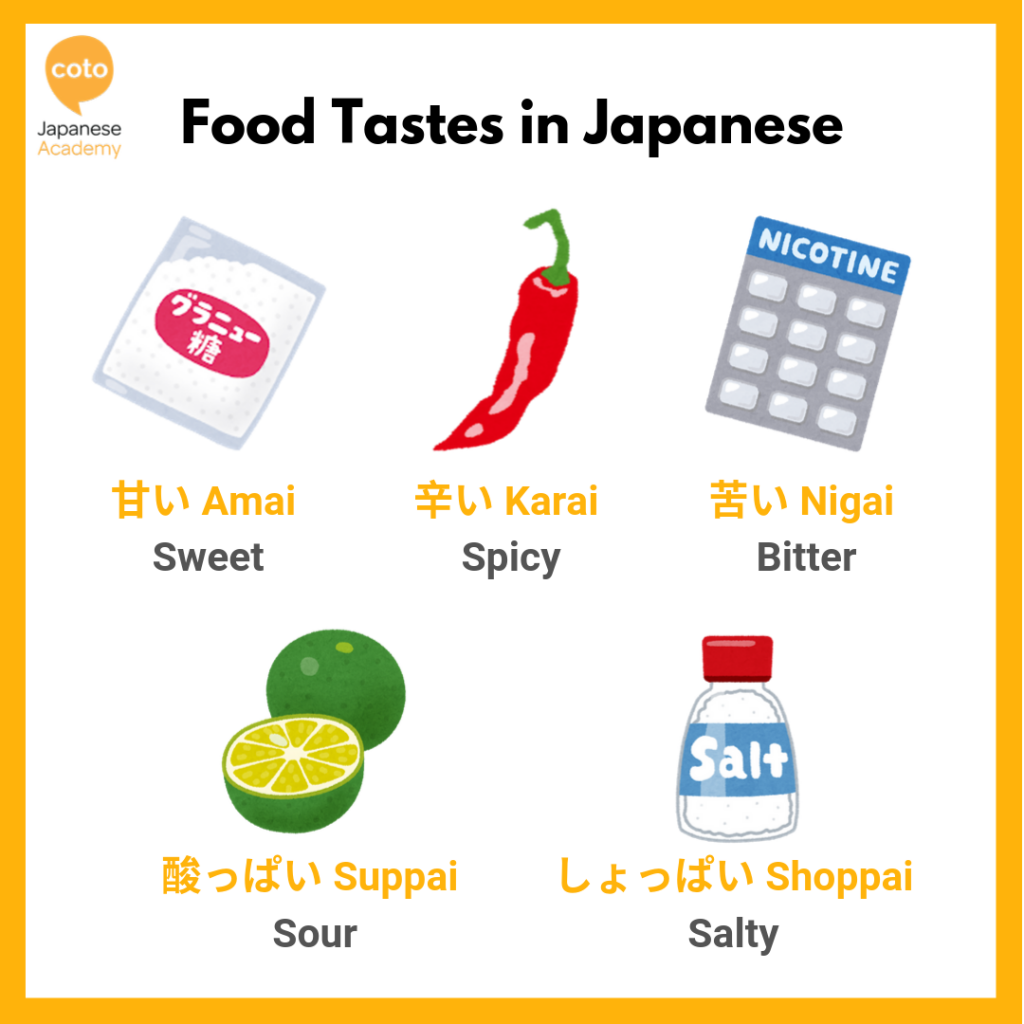
When you take a bite or sip something, you immediately get a taste of certain basic flavors, including sweet, spicy, bitter, sour and salty. These are some of the most common flavors you would find on the palate of just about every meal of the day, so let’s go through how to say these basic terms in Japanese, plus a few bonus ones.
1. 甘い (Amai)
甘い (Amai) translates to “sweet” and is used the same way in Japanese as you would in English. As you would imagine, you can use this word to describe sweet foods such as fruits or desserts like cake, caramel, or pudding. You can also use it as a noun by adding み (mi) to say 甘み (amami), meaning “sweetness.”
Example:
りんごは甘いですね!
Ringo wa amai desune!
The apple is sweet!
2. 辛い (Karai)
辛い (Karai) means “spicy,” and just like in English, it describes anything with the burning sensation you feel on your tongue from consuming food with capsaicin, basically the chemical compound found in foods like chili peppers. It can also describe the sharp kick you feel in the nose when you eat foods like wasabi or horseradish.
Fun fact: many languages actually differentiate between the two sensations, so they have more than one word for “spicy”! However, in Japanese, you can use 辛い, or its noun version 辛味 (karami), to describe anything with a fiery kick, from curry and Mexican salsa to wasabi and mustard!
Example:
わたしは辛いものは食べられません。
Watashi wa karaimono wa taberaremasen.
I cannot take spicy food.
3. 苦い (Nigai)
苦い (Nigai) translates neatly to “bitter” in Japanese. It can be used to describe anything with a bitter flavor, but depending on context, it can be a neutral description or one with a negative connotation. While it can describe an unpalatable food, the term can be applied outside of the culinary world.
You can say 苦い to describe something harsh or unpleasant, like someone making a grim face 苦い顔 (nigai kao) or an unpleasant experience 苦い経験 (nigai keiken). However, in terms of food, it’s often used to describe bitter things, including things you may enjoy like coffee or chocolate, or things you very much do not, such as medicine.
Example:
私は苦い食べ物が好きじゃないです。
Watashi wa nigai tabemono ga suki janaidesu.
I do not like bitter food.
4. 酸っぱい (Suppai): Sour
酸っぱい (suppai) is the Japanese word for “sour,” “tart,” or “tangy”. It essentially describes any food with a high acidity, such as citrusy foods like lemons and limes. Unlike English, you generally don’t use 酸っぱい to describe something outside of food. It is sometimes combined with the word for sweet, or 甘い (amai, to make 甘酸っぱい (amasuppai), which means “sweet and sour.”
So, you might commonly hear this word being used to describe particularly sour Japanese foods such as 梅干し (umeboshi).
Example:
梅干しは酸っぱいけど、おいしいです。
Umeboshi wa suppai kedo, oishii desu.
Umeboshi is sour, but delicious.
5. しょっぱい (Shoppai): Salty
しょっぱい (shoppai) describes any foods that taste salty or anything very high in salt. You would use this word to describe foods that are very salty, like french fries or chips. In terms of food, the connotation can range from neutral, positive, or negative depending on context. If you describe something as しょっぱい (shoppai), it could possibly convey that the cook made the dish too salty.
Also note that しょっぱい can also be used as Japanese slang to describe someone as stingy with money or dull and disappointing.
Example:
この ラーメンは しょっぱいです。
Kono ra-men wa shoppai desu.
This ramen tastes salty.
6. うまみ (Umami): Savory
While there are many Japanese words borrowed from English, umami is an example of the opposite: a Japanese term that has actually been adopted by English speakers. Since it’s so widely used in English, it likely needs no introduction, but in case you’re not exactly sure what flavor it describes, let’s break it down.
うまみ (umami) is a word that describes savoriness; in other words, rich or meaty flavors that sort of hit the spot, such as steak, seaweed, or mushrooms. It’s actually the primary flavor that comes from using MSG or monosodium glutamate. Umami was discovered and coined by the Japanese chemist Dr. Kikunae, who isolated the flavor, creating what we know as MSG today. It’s actually naturally occurring in tomatoes, mushrooms, seaweed, beef, pork, and much more!
So, うまみ (umami) is actually the noun version of the term, so you can use うまい (umai) to use it as an adjective. However, note that it shares the same sounds as the term 旨い (umai), which is used to describe something delicious in general rather than just something savory.
Example:
すき焼きのうまみがすごくいいですね。
Sukiyaki no umami ga sugoku ii desune.
The savory flavor of the sukiyaki is so delicious!
Want to know how to say specific ingredients in your food? Read our blog to find out everything you need to know about food allergens and more: How To Read Japanese Nutrition & Food Labels
Food Textures in Japanese
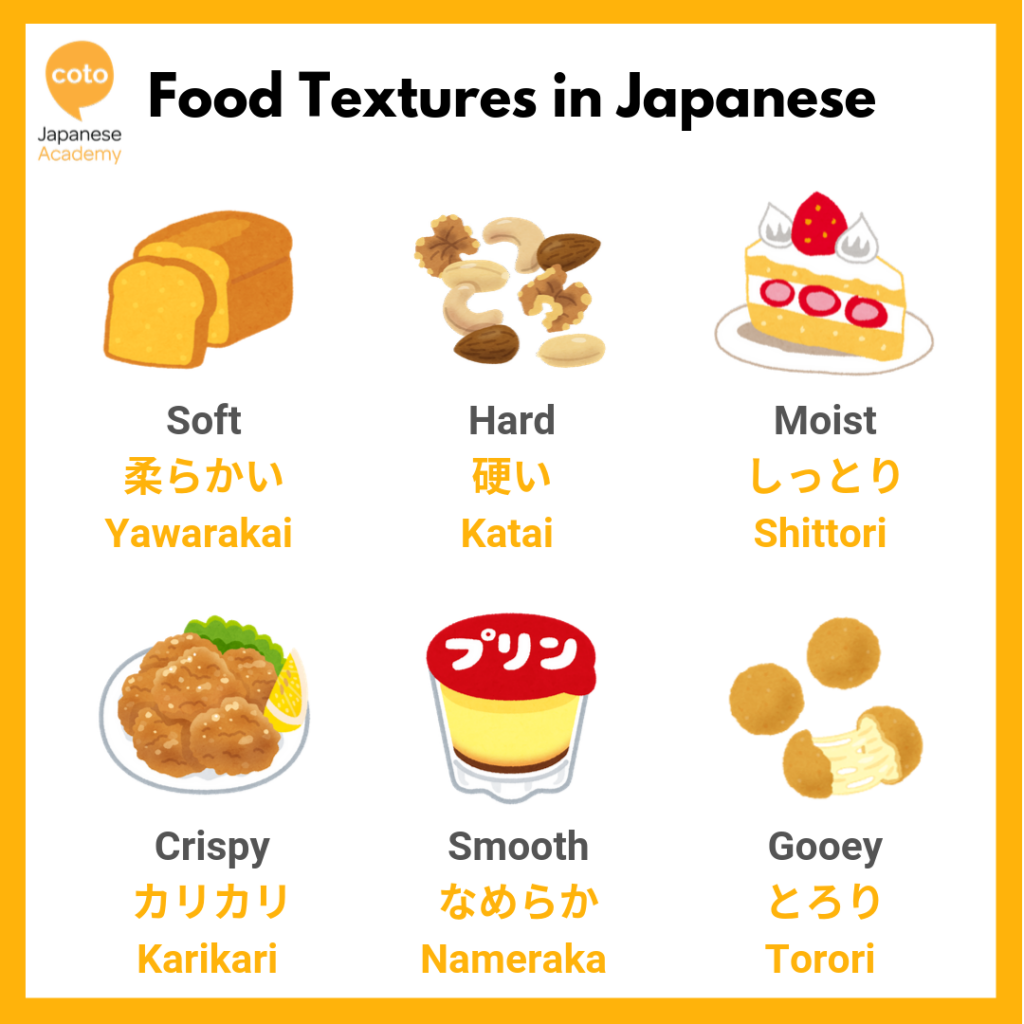
Food is truly like an onion, pun intended; there are layers to the experience. The joys of eating food don’t end with flavors we can taste; texture is another dimension worth exploring and describing. We enjoy how food feels in our mouth; sometimes it is chewy, crunchy, crispy, or soft. So, let’s go through some common Japanese terms for describing the textures of food!
1. 柔らかい Yawarakai
柔らかい (Yawarakai) means “soft” in Japanese. It can be used to describe literally anything that is soft, such as pillows or clothes, and even softness in terms of force. It’s actually the same kanji found in the Japanese martial art, Judo: 柔道, which means “way of softness”.
However, in terms of food, you can use this to describe any food that has a soft texture, like soft bread, pudding, or soft serve ice cream!
Example:
このパンはとても柔らかいですね。
Kono pan wa totemo yawarakai desu ne.
This bread is so soft, isn’t it?
2. 硬い (Katai): Hard
硬い (Katai) can be used to describe food that is “hard” to bite or chew. Like 柔らかい (yawarakai), the term 硬い is used for anything that is physically hard, like wood or metal. But it’s often used to describe food with a “hard” or “tough” texture such as ice or baguettes.
Example:
アーモンドは硬いです。
Aamondo wa katai desu.
The almonds are hard.
At ramen shops, you often are able to choose how hard or soft you want your noodle texture to be. Find out more by reading our blog: How to Order and Customize Your Ramen in Japanese
3. しっとり (Shittori): Moist
しっとり describes a moist, tender, and slightly damp texture, the kind that makes a slice of cake feel perfectly hydrated rather than dry, or a piece of chicken feel juicy rather than tough. It is a deeply positive texture word in Japanese food culture, and is particularly associated with baked goods, steamed dishes, and well-marinated meats. If a cake or pastry is described as しっとり on a menu, it signals that it has been carefully made to avoid the dreaded dry texture that can let down an otherwise good dessert.
Example:
このチョコレートケーキ、しっとりしていてとても美味しい!
Kono chokoreeto keeki, shittori shite ite totemo oishii!
This chocolate cake is so moist and tender — absolutely delicious!
4. カリカリ (Karikari): Crispy
カリカリ is a Japanese onomatopoeia that mimics the sound and sensation of biting into something crunchy or crispy. Like many Japanese food texture words, it is an onomatopoeia, a word that imitates the actual sound something makes which makes it very expressive and fun to use. You would use カリカリ to describe things like crispy fried chicken skin, crackers, or a perfectly toasted piece of bread.
Example:
このからあげはすごくカリカリですよ!
Kono karaage wa sugoku karikari desuyo!
The Karaage (Japanese fried chicken) is super crispy!
5. 滑らか Nameraka
滑らか (Nameraka) describes a smooth, silky, and even texture, the kind of luxurious mouthfeel you get from a perfectly blended sauce, a velvety pudding, or premium ice cream. Unlike ふわふわ, which captures lightness and airiness, 滑らか emphasizes the seamless, frictionless quality of something that glides smoothly. It conveys elegance and quality, and you will often see it used on menus and packaging to describe high-end or carefully crafted food products.
Example:
このプリン、口当たりが滑らかで最高ですね。
Kono purin, kuchiatari ga nameraka de saikou desu ne.
The texture of this pudding is so silky smooth — absolutely wonderful.
6. とろり Torori
とろり (Torori) describes a thick, slow-moving, melty texture, like a perfectly runny egg yolk, melted cheese, or a rich, velvety stew. It is an incredibly satisfying texture word that captures the luxurious quality of food that melts in your mouth or flows slowly. You will often hear it used to describe slow-cooked dishes, creamy sauces, or the prized runny center of a soft-boiled ramen egg.
Example:
ピザのチーズはとろりとしています。
Piza no chi-zu wa torori toshiteimasu.
The cheese in the pizza is gooey.
7. モチモチ (Mochimochi): Chewy and Stretchy
モチモチ is one of the most distinctly Japanese texture words and describes a soft, chewy, stretchy texture — like the inside of fresh mochi, rice cakes, or certain types of bread and noodles. It is considered a highly desirable texture in Japanese food culture, and you will often see it used proudly on menus or food packaging to describe the quality of the product.
Example:
このお餅、モチモチしていておいしいね。
Kono omochi, mochimochi shite ite oishii ne.
This mochi has such a chewy, stretchy texture; it’s delicious.
8. ふわふわ (Fuwafuwa): Fluffy / Airy
ふわふわ describes something that is light, airy, and fluffy, like a soufflé pancake, cotton candy, or a perfectly whipped cream topping. It evokes a sense of lightness and softness that goes beyond just 柔らかい (soft), ふわふわ specifically captures that cloud-like, weightless quality that makes certain foods feel special. It is another word you will frequently see on menus in Japan, particularly for pancakes and desserts.
Example:
このパンケーキ、ふわふわで信じられないくらい美味しい!
Kono pankeeki, fuwafuwa de shinjirarenai kurai oishii!
These pancakes are so fluffy, unbelievably delicious!
Other Useful Words to Describe Food in Japanese
There are a wide variety of words you can use for describing food in Japanese, such as its fragrance, freshness, temperature and more. So, let’s go through some more useful words you can use to describe food in Japanese.
| Japanese | Furigana | Romaji | English |
|---|---|---|---|
| 美味しい | おいしい | Oishii | Delicious |
| 味がない | あじがない | Ajiganai | Tasteless |
| 味が強い | あじがつよい | Aji ga tsuyoi | Strong flavor |
| 香りがいい | かおりがいい | Kaori ga ii | Fragrant |
| くさい | くさい | Kusai | Smelly |
| 凍っている | こおっている | Kootteiru | Frozen |
| 新鮮 | しんせん | Shinsen | Fresh |
| 暑い | あつい | Atsui | Hot |
| 冷たい | つめたい | Tsumetai | Cold |
| 乾燥している | かんそうしている | Kansouhshiteiru | Dry |
| 油っこい | あぶらっこい | Aburakkoi | Greasy |
| みずみずしい | みずみずしい | Mizumizushii | Juicy |
Conclusion: Share Your Love of Food in Japanese!
If you want to ask for food recommendations, or give your own, it is best to know how to describe the flavor, textures, or even fragrances of food in Japanese. Food is one of the best parts of visiting new places, especially Japan, so being able to share your love of the tastiest dishes you try is a great way to start expressing yourself and your passions.
Learn to Describe Food Naturally in Japanese!
If you really want to learn how to describe the flavors and textures of your favorite dishes naturally in Japanese, join Coto Academy! Our native Japanese teacher focuses on creating an environment where you can practice actually speaking Japanese and developing a real ‘feel’ for natural spoken language. We offer a variety of Japanese language courses, including conversation, intensive, JLPT, and business classes, so we can tailor to your exact needs.
Stop by one of our campuses in either Tokyo or Yokohama, or join us from anywhere around the world online! Ready to sign up or just want to have a casual chat for more details? Fill out the form below for a free consultation!
How do you describe flavors in Japanese?
The five basic flavor words in Japanese are 甘い (amai — sweet), 辛い (karai — spicy), 苦い (nigai — bitter), 酸っぱい (suppai — sour), and しょっぱい (shoppai — salty). For a rich, savory flavor, うまい (umai) is the go-to expression, derived from the globally recognized term うまみ (umami). These words work just like adjectives in English and can be used directly to describe any food.
How do you describe food textures in Japanese?
Japanese has a rich variety of texture words, many of which are onomatopoeia that mimic the actual sound or sensation of eating. Some of the most common are サクサク (sakusaku — light and crispy), モチモチ (mochimochi — chewy and stretchy), ふわふわ (fuwafuwa — fluffy and airy), とろとろ (torotoro — melty and runny), and しっとり (shittori — moist and tender)
What is umami in Japanese?
うまみ (umami) is a Japanese term that describes a rich, savory flavor, the deep, meaty taste found in foods like steak, mushrooms, seaweed, and tomatoes. It was coined by Japanese chemist Dr. Kikunae, who isolated the flavor compound now known as MSG. While うまみ is the noun form, you can use うまい (umai) as an adjective to describe something savory or simply delicious.
The post How to Describe Food Flavors & Textures in Japanese appeared first on Coto Japanese Academy.
Article source: https://cotoacademy.com/useful-words-describe-food-japanese-illustrated-guide/