

Travelling to a foreign destination becomes much more enriching when you understand or can speak the local language.
Sure, translating languages is now as easy as tapping a button on your smartphone, given the multitude of apps available. But it feels far more rewarding when you are able to interact more familiarly with the locals.
Even knowing a few simple phrases – or the local slang – can help you communicate better, connect with the community and gain a deeper understanding of the culture and place.
Learning a new language takes time and commitment, and there are plenty of opportunities in Malaysia to get started.
From university degrees to language centres, we spoke to learners and educators to find out how picking up a foreign language can open doors to meaningful and enriching travel experiences.
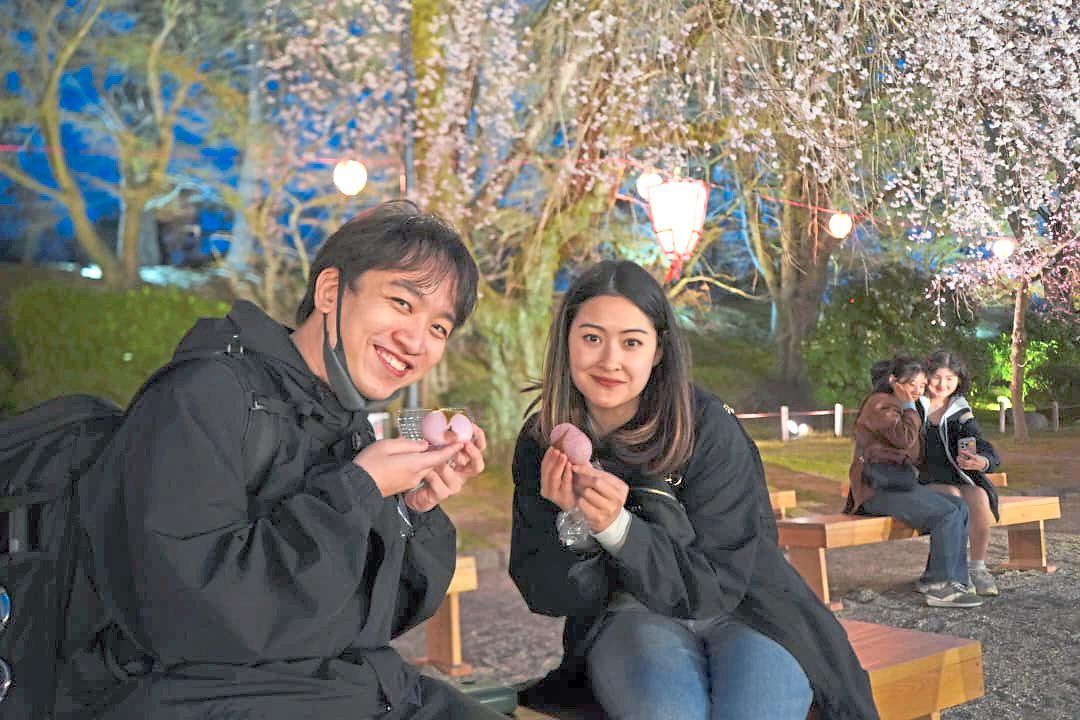
Foo (left) and Zetty attending the cherry blossom festival at Nagoya Castle. — FOO KUANG YAO
Beyond the classroom
Three decades ago Zetty Erisa Buang, 36, was introduced to Japanese culture. Her parents had brought her to a Japanese restaurant, where she found herself awestruck by a staff elegantly dressed in a kimono.
“She spoke in Japanese, a language I was not familiar with, but it sounded so beautiful,” says Zetty, citing that as the moment that piqued her interest in the language.
Fast forward to present time, and Zetty has not only completed her Japanese language studies at the A to Z Language Centre in Malaysia, but she has also gone to Nagoya, Japan to further improve her skills.
Zetty spent about six weeks at the Japanese Language School there from February to April this year, where she opted for one of the flexible courses.
As someone who finds travelling more thrilling when done with friends, Zetty is grateful that she was able to embark on this journey with a fellow Malaysian classmate.
Foo Kuang Yao, 34, who was in the same programme, shares that they were introduced to the course by one of their classmates in Malaysia who had recently returned from studying in another Japanese city, Kyoto.
“It felt like a good opportunity because, after finishing our studies here, we could put what we had learned into practice in Japan,” says Foo.
Zetty agrees. “We wanted to polish our Japanese, test our skills there.”
The duo explored other parts of the country, namely Kyoto, Osaka, Tokyo and Hokkaido. They spent four days in each area, just enough time to discover the cities’ respective cultural and natural wonders.
Of course, their time was largely spent in Nagoya, where they participated in the different activities conducted by the language school.
Other than visiting cultural spots, the school also held activities like flower arrangement classes and tea ceremony sessions. “Sometimes, when Foo and I wanted to revisit a place, we would simply go again on the weekends,” Zetty says.
Their reasons for taking Japanese lessons are different. Zetty is encouraged by her husband so that she can be the “translator” the next time they visit Japan together. Foo, meanwhile, loves consuming Japanese media – from films to video games – and would love to have a deeper understanding of them.
Both are glad to have experienced Nagoya together.
“Being in a foreign country takes some getting used to, so having someone there to rely on made a big difference,” says Foo. “We helped each other more times than we could count.”
Zetty muses, “It felt more like we were on a student exchange programme than anything.
“We were both pretty clumsy when speaking to locals in Japanese sometimes. But if there were certain words I could not remember, Foo would help me out, and vice versa.”
Foo was most ecstatic to have visited the Final Fantasy XIV-themed cafe in Tokyo. “I played the game for nearly a decade, so it was a dream destination for me,” he say were on a student exchange programme than anything.
For Zetty, she enjoyed Hokkaido so much that she would love to revisit one day with her husband. “But he insists on going back to Kyoto … we’ll see,” she says.