
Seoul holds the top spot for a second year. Asia now owns seven of the world’s top 20 student cities. And five Asia Exchange destinations rank in the top 15. Here is what the numbers actually mean.
Every year, QS publishes a ranking of the world’s best cities for students. The 2027 edition covers 150 cities across 59 higher education systems. Each city is evaluated on six factors: university quality, employer activity, affordability, student mix, desirability, and the student experience itself. It is one of the most comprehensive tools available for students deciding where to study abroad.
The headline story from the QS Best Student Cities 2027 ranking is the continued rise of Asia. Seoul tops the global list for the second consecutive year. Tokyo holds second place. And across the top 20, Asia Pacific cities now outnumber any other region. For students considering a semester or degree abroad in Asia, the ranking adds hard data to what many already sense. The continent has become one of the most compelling study destinations in the world.
The global top 10: what changed in 2027
The full top 10 for 2027 is below. One shift stands out immediately. No North American city makes the top 10, the first time this has happened in the ranking’s history. Boston and Montreal are the closest, at 18th and 20th respectively. Affordability is a key reason. American cities score particularly poorly on that indicator: Boston at 5.3%, New York at 6.2%, Los Angeles at 9.8%. Europe and Asia have moved ahead not just in reputation but in value.
| # | City | Country | Key strength |
|---|---|---|---|
| 1 | Seoul | South Korea | University rankings (#1), employer activity |
| 2 | Tokyo | Japan | Employer activity (#1), desirability |
| 3 | London | United Kingdom | University strength, student experience |
| 4 | Melbourne | Australia | Student mix (#1), desirability |
| 5 | Sydney | Australia | University quality, livability |
| 5 | Munich | Germany | Student experience, affordability |
| 7 | Paris | France | University strength, affordability |
| 8 | Berlin | Germany | Student voice (#1), desirability |
| 9 | Vienna | Austria | Desirability (#2), university improvement |
| 10 | Zurich | Switzerland | International outlook, research excellence |
Asia Exchange destinations in the QS Best Student Cities 2027
Five Asia Exchange destinations appear in the QS Best Student Cities 2027 ranking. Four of them rank in the global top 15. That is a strong signal for students choosing where to study abroad in Asia. Here is a closer look at each one.
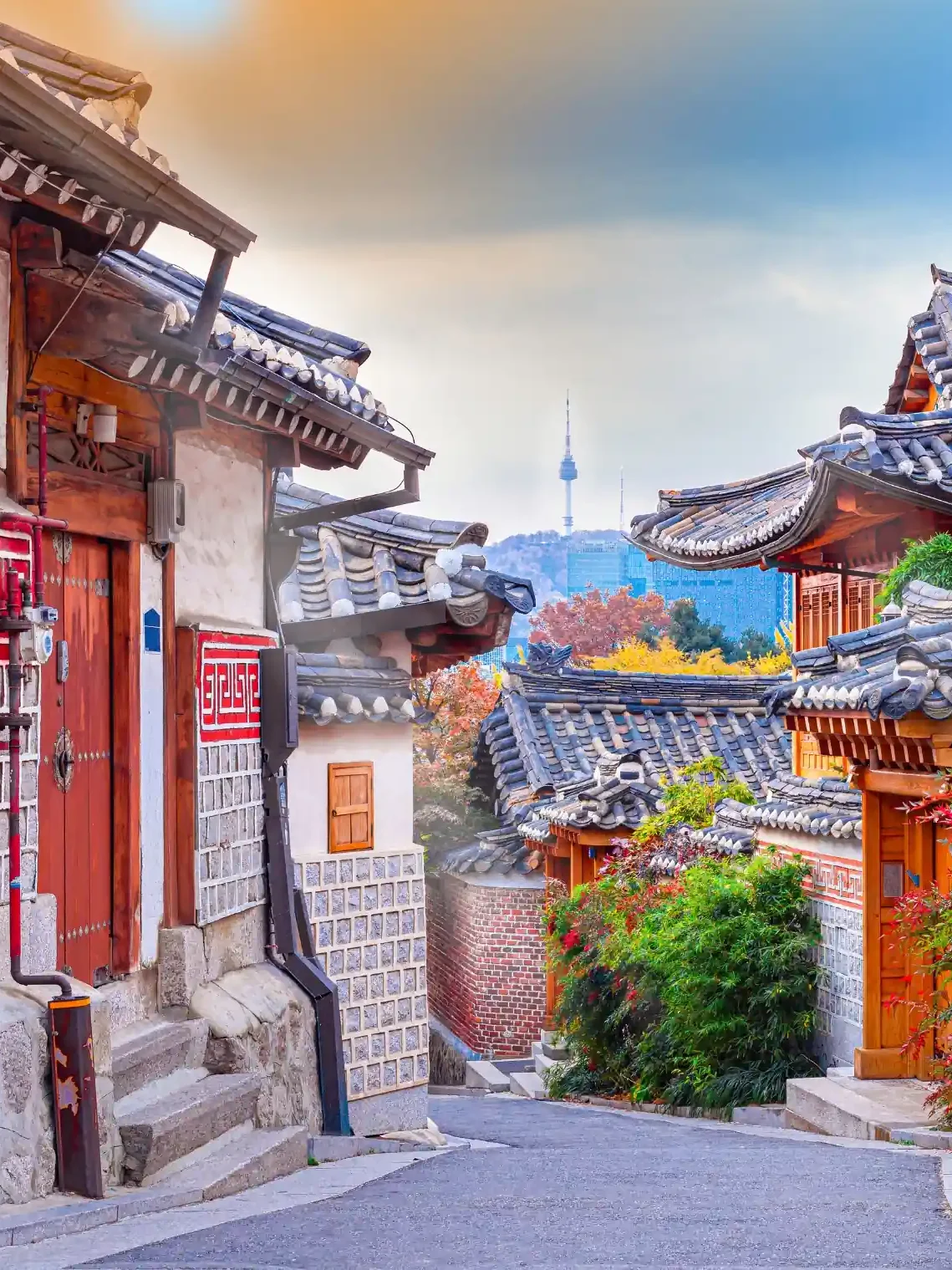
#1 Seoul, South Korea
Seoul tops the QS Best Student Cities 2027 ranking for the second year in a row, and the margin over second place is significant. It scores 100% for university rankings, reflecting the density and quality of institutions in the city. Employer activity is also a standout metric. Seoul is one of the world’s top destinations for graduate hiring, particularly in technology, finance, and the creative industries. By the standards of global capitals, Seoul’s cost of living remains genuinely manageable for students.
Asia Exchange universities in Seoul: Hanyang University, Hankuk University of Foreign Studies (HUFS), Konkuk University
#5 Sydney, Australia
Sydney enters the top 5 for the first time, tied with Munich at fifth place. Its performance is built on strong university rankings and consistent livability scores. The city offers a combination that is difficult to match. World-class academic institutions, a Pacific Ocean setting, and one of the most internationally diverse student populations anywhere in Australia. Furthermore, Sydney sits within reach of other major Australian cities and the broader Asia Pacific region. That makes it one of the best bases for regional travel during a semester abroad.
Want to study in Sydney? Our sister platform Beyond Abroad works with the University of Sydney, UTS and UNSW Sydney.
Explore Sydney programs via Beyond Abroad →
#11 Singapore
Singapore climbs four places to 11th, continuing a consistent upward trend. It ranks as the top student city in Southeast Asia and scores particularly well on employer activity and university quality. As Asia’s leading financial and technology hub, Singapore puts students near regional corporate headquarters that few other cities can match. The student mix is genuinely international, and the city’s infrastructure, transport, and safety are among the best in the world. It is compact, efficient, and very well connected to the rest of the region.
Asia Exchange university in Singapore: James Cook University Singapore (2-year bachelor programs available)
#14 Taipei, Taiwan
Taipei is the biggest mover among Asia Exchange destinations, jumping 12 places to 14th. That kind of momentum is significant. It reflects a broader trend: Taiwan is investing heavily in higher education and international student attraction. Taipei is genuinely affordable by Asian capital standards, safe, and incredibly well connected by public transport. Students consistently rank its food culture among the best in the world. Academic quality, low costs, and a high quality of life make Taipei one of the most compelling rising destinations in the QS ranking.
Asia Exchange university in Taipei: Shih Chien University
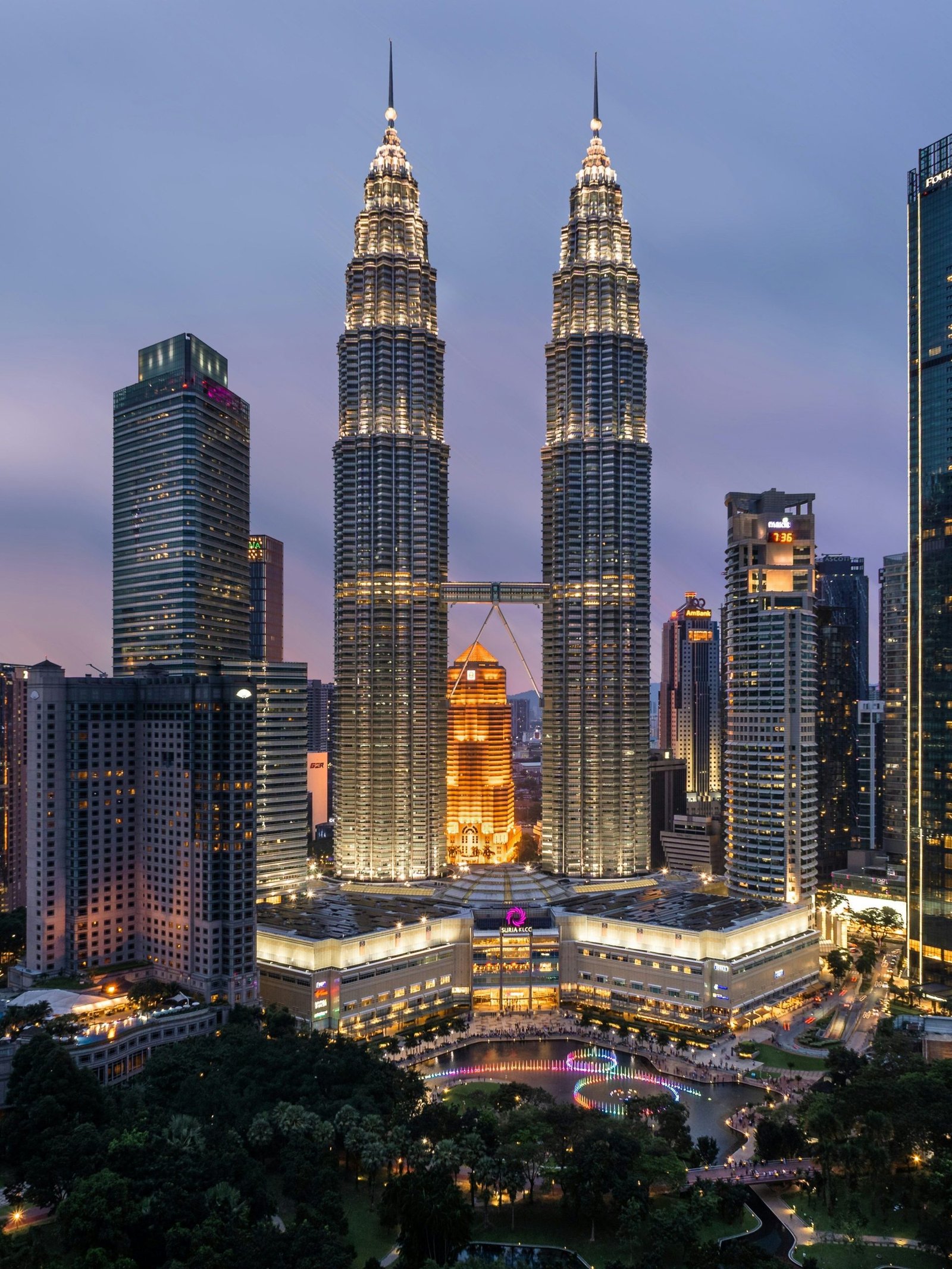
#15 Kuala Lumpur, Malaysia
Kuala Lumpur rises eight places to 15th globally, making it Southeast Asia’s second student city behind Singapore. It places eighth in the world on university rankings and 13th for employer activity. For students looking for a genuinely affordable Asian city with strong academic infrastructure, KL is hard to beat. Living costs remain low compared to Singapore, Tokyo, or Seoul. The city’s multicultural character, drawn from Malay, Chinese, and Indian communities, gives it a richness that students find distinctive.
Asia Exchange universities in Kuala Lumpur: Universiti Putra Malaysia, Universiti Kuala Lumpur
Explore Kuala Lumpur programs →
#16 Kyoto, Japan
Kyoto enters the top 20 at 16th, making it Japan’s second ranked student city behind Tokyo. Where Tokyo is relentless energy and scale, Kyoto is something else entirely: temples, bamboo forests, traditional neighborhoods, and a pace of life that students consistently describe as unlike anywhere else in Asia. It scores strongly on desirability and student experience, and its universities carry deep research traditions. For students who want Japan without the scale of Tokyo, Kyoto is the answer.
Asia Exchange university in Kyoto: Temple University Japan
What the QS Best Student Cities 2027 ranking actually measures
Understanding how the ranking works helps explain why certain cities perform well and others do not. QS evaluates cities on six indicators, each weighted differently. University rankings account for the quality and number of institutions in a city. Employer activity reflects graduate hiring demand, measured through QS’s annual employer survey. Affordability factors in tuition fees, local cost of living, and purchasing power. Student mix captures the diversity and international composition of the student body. Desirability covers safety, environment, and quality of life as rated by prospective students. Finally, student view draws directly from QS’s international student survey.
The ranking is therefore not purely about academic prestige. A city can have outstanding universities and still rank poorly if living costs price students out. Graduate employment outcomes matter just as much. That combination is what makes it a genuinely useful tool for students making a study abroad decision. It is not just a league table of university reputation.
The big trend: Asia’s continued rise
The most significant story in the QS Best Student Cities 2027 results is the continued ascent of Asia Pacific. Seoul and Tokyo hold the top two positions. Melbourne and Sydney sit in fourth and fifth. Below the top five, Singapore, Taipei, Kuala Lumpur, Kyoto, and Hong Kong all feature in the top 20. Asia Pacific is now more represented in the global top 20 than any other region in the world.
This is not a coincidence. Several trends are driving it. Asian governments are investing heavily in higher education. Graduate employer networks in cities like Seoul, Tokyo, and Singapore are genuinely world-class. Affordability, compared to London, New York, or San Francisco, remains favorable in many Asian cities. And the student experience in cities like Taipei and Kuala Lumpur is consistently rated highly by international students themselves. The data reflects what students who have been there already know.
Six Asia Exchange cities in the QS top 20. Five in the top 16. One at number one, for the second year running. The numbers make a strong case. The cities themselves make an even stronger one.
Ready to study in one of the world’s top student cities? Explore Asia Exchange programs in Seoul, Singapore, Taipei, Kuala Lumpur, and Kyoto, or discover Sydney through our sister platform Beyond Abroad.
The post QS Best Student Cities 2027: Where Should You Study Abroad? appeared first on Asia Exchange.
Article source: https://asiaexchange.org/blogs/qs-best-student-cities-2027-study-abroad/