
Choosing a destination for a finance internship abroad is not just about picking a city you want to live in. It is about matching your career goals to the right financial ecosystem, at the right moment in your studies. The three cities in this comparison, New York, Singapore, and Dublin, are all genuine global finance hubs. But they are built on different strengths, attract different kinds of companies, and will give you very different things when you leave.
All three are available through the Asia Exchange internship program, with fully supported placements matched to your profile and field of study. This post breaks down what each city actually offers, who it is best suited for, and what to consider before you apply.


New York City
Why it matters
New York is the most prestigious finance internship destination on the planet. Wall Street is not a metaphor here. The Financial District in lower Manhattan is home to Goldman Sachs, JPMorgan, Morgan Stanley, Citigroup, and dozens of the world’s most recognizable financial institutions. Working in that environment, even as an intern, puts your name in a context that carries real weight. Employers everywhere recognise it.
Beyond the banks, New York has the world’s largest concentration of hedge funds, private equity firms, asset managers, and investment boutiques. The density of opportunity across every sub-sector of finance is genuinely unmatched. For corporate finance, investment banking, or capital markets ambitions, New York is the most direct route to the environment where those careers are built.
What the experience actually looks like
GCC’s NYC Director Melanie Pellis confirms that finance and business are among the top fields for intern placements in New York. Host organizations range from consulting firms and financial services companies to non-profits and agencies, spanning Manhattan and Brooklyn. Internships can be full-time in-office, hybrid, or remote depending on the host organization.
Yasmin Mohsen, a UC Berkeley Economics and Media Studies student, interned in New York through GCC. She picked up technical software skills, built time management habits, and even drew on her French language skills unexpectedly for a specific project at her host organization. That is how GCC placements work in practice. Your background and skills shape the role, rather than the other way around. The environment is real work, real deliverables, and a genuine learning curve from the first week.
The cost of living reality
New York is expensive. Among the three cities in this comparison, it has the highest cost of living by a significant margin. Accommodation runs from $1,800 to $3,000 per month depending on location and setup. However, the average wage for bachelor’s-degree-level US interns is around $23 per hour, roughly $3,700 per month for a full-time placement, which makes it more manageable than it sounds. Longer placements of 4 to 6 months also come with stipends from the host organization through the Asia Exchange program.
Who New York is for
New York is the right choice if you want your internship to function as a direct signal to top-tier finance employers. It suits students aiming for competitive graduate roles in investment banking, corporate finance, or private equity. It also suits students willing to trade a lower net disposable income for the prestige New York adds to a CV.


Singapore
Why it matters
Singapore is Asia’s leading financial center. It ranks fourth globally on the Global Financial Centres Index, just one point behind Hong Kong, and is known within finance for its commitment to becoming a Smart Nation, with over 50 fintech innovation labs and a rapidly growing digital finance sector. Major global banks including DBS, OCBC, UBS, Citibank, BNP Paribas, and Bank of America all operate significant regional presences in the city.
What makes Singapore particularly compelling as a finance internship destination is its position as the gateway to Southeast Asian capital markets. The region’s growth trajectory over the next decade is significant. Students who build a professional network in Singapore now are positioning themselves early in a market that will matter considerably more at mid-career.
What the experience actually looks like
GCC’s Singapore Director Valerie Lim handles every placement personally, getting to know each student individually before matching them with a host organization. One thing she notes consistently: Singaporean companies actively want interns with international perspectives, and are interested in hosting students across multiple seasons, not just summer.
Hassanatu, a Drexel University student, spent six months at Ento Industries in Singapore, gaining hands-on exposure to how companies tackle food security, waste reduction, and environmental impact. Her placement reflects the breadth of what GCC sources in Singapore. Students consistently describe the work culture as genuinely international, fast-moving, and confidence-building from the first weeks. English is the language of business throughout.
The cost of living reality
Singapore is an expensive city, but it compares well to New York on a net basis. The average finance intern earns around SGD 1,126 per month, and for longer paid placements the compensation rises considerably. Living costs are high. Accommodation runs SGD 800 to 1,500 per month in shared housing. Outside of rent, however, day-to-day costs are manageable. Lower personal income taxes also make Singapore an attractive location for international finance talent, with roles in investment banking and asset management particularly lucrative.
Who Singapore is for
Singapore is the right choice for students with a genuine interest in Asia Pacific markets, digital finance, or wealth management. It also suits students who want a genuinely global environment without New York’s cost pressure, and those considering a career that includes time in Asia. The city rewards curiosity about emerging markets and digital finance. New York, focused on traditional capital markets, often does not.
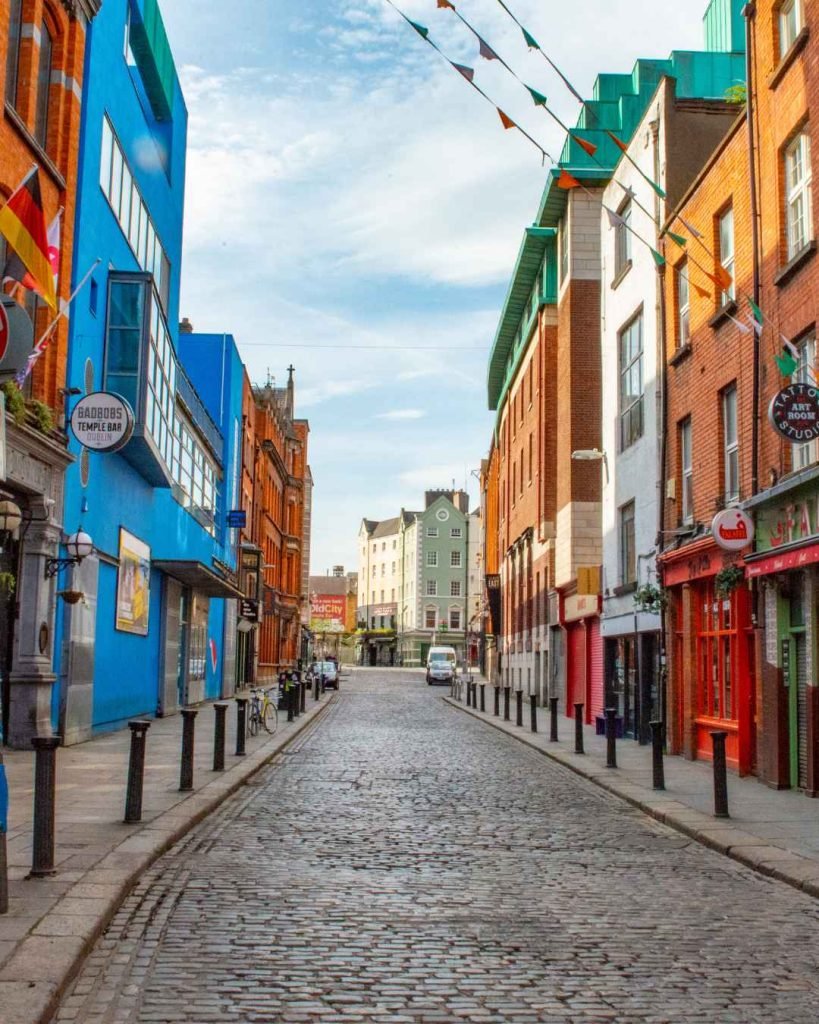

Dublin
Why it matters
Dublin is the most underestimated finance hub of the three. The Dublin International Financial Services Centre handles over €1 trillion per year. Growth has accelerated since Brexit redirected European financial activity away from London. Major global banks including Citibank and Commerzbank have established headquarters in Dublin, and Ireland is home to major global players including Stripe, PayPal, Mastercard, and numerous other financial technology companies, alongside a fintech sector that has attracted nearly €1 billion in venture capital investment over the past five years.
Dublin’s practical advantage for international finance interns is often overlooked. The IFSC is home to half of the world’s top insurance companies and banks. The density of opportunity is genuinely high for a city of its size. Ireland’s EU membership also makes Dublin a natural home for compliance, regulatory, and fintech roles that require EU authorization.
What the experience actually looks like
GCC’s Catherine Hanley, who has worked with more than 70 universities to design internship programs in Dublin over nearly two decades, oversees the matching process for placements in Ireland. Her experience confirms that Dublin’s finance ecosystem is particularly strong in fund administration, compliance and AML, corporate treasury, fintech, FP&A, risk, and insurance. These are areas where interns get meaningful exposure to technically demanding work that is harder to access at the same level in larger, more competitive markets.
Catherine’s starting point is always identifying each student’s priorities and goals before making any match. Employer feedback from GCC’s Dublin placements consistently highlights how quickly students are trusted with real work. For finance students, the combination of EU regulatory exposure and proximity to major global banks makes Dublin an unusually rich environment for a relatively affordable city.
The cost of living reality
Dublin is the most affordable of the three cities in this comparison, though costs have risen significantly in recent years. Shared accommodation typically runs from €800 to €1,400 per month. The city is compact and walkable, public transport is adequate, and day-to-day living costs are considerably lower than New York. For students on tighter budgets, Dublin offers genuine finance exposure without the financial pressure of the other two options.
Who Dublin is for
Dublin is the right choice for students interested in fintech, compliance, fund operations, or European regulatory finance. It suits students who want to build a network within the EU single market. It also appeals to those drawn to the growing intersection of technology and financial services. Furthermore, Dublin suits students who want quality finance exposure abroad without the cost pressure of the other two cities.
Side-by-side comparison
| Factor | New York | Singapore | Dublin |
|---|---|---|---|
| Finance speciality | Investment banking, capital markets, private equity, hedge funds | Asset management, wealth management, fintech, regional banking | Fintech, fund admin, compliance, corporate treasury, insurance |
| CV weight | Highest globally | Top tier in Asia Pacific | Strong in EU/European markets |
| Cost of living | Very high | High | Moderate |
| Best for | Banking ambitions, high-pressure environments, global brand exposure | Asia Pacific interest, digital finance, emerging markets | Fintech, compliance, EU market access, lower budget |
| Working language | English only | English only | English only |
The verdict
Ready to start your finance internship abroad? Explore the Asia Exchange internship program across New York, Singapore, Dublin, and five more cities.
The post Finance internship abroad: New York, Singapore or Dublin? appeared first on Asia Exchange.
Article source: https://asiaexchange.org/blogs/finance-internship-abroad-new-york-singapore-dublin/