
Most students who choose to study abroad in Italy think of Rome or Milan first. Sardinia rarely comes up. That is part of what makes it such a good decision. The island sits in the middle of the Mediterranean, largely off the radar of the main tourist routes. Cagliari, its vibrant capital, is a proper student city: all the energy you would want from a semester abroad, almost none of the crowds.
Asia Exchange partners with the University of Cagliari (UNICA) to give you access to a study abroad experience that is genuinely unlike anywhere else in Europe. This guide covers what UNICA is actually like, how the academic side works, what life in Cagliari looks like day to day, and how to apply.
Why Sardinia?
Sardinia is Italy’s second-largest island and one of the most naturally beautiful places in Europe. The coastline is extraordinary. Clear water, white sand, rocky coves that look like they belong somewhere much further away. The interior of the island is equally striking: mountains, cork forests, and prehistoric nuragic towers that predate the Roman ruins you find elsewhere in Italy. The food is completely its own thing, distinct from mainland Italian cuisine and deeply tied to the island’s pastoral traditions.
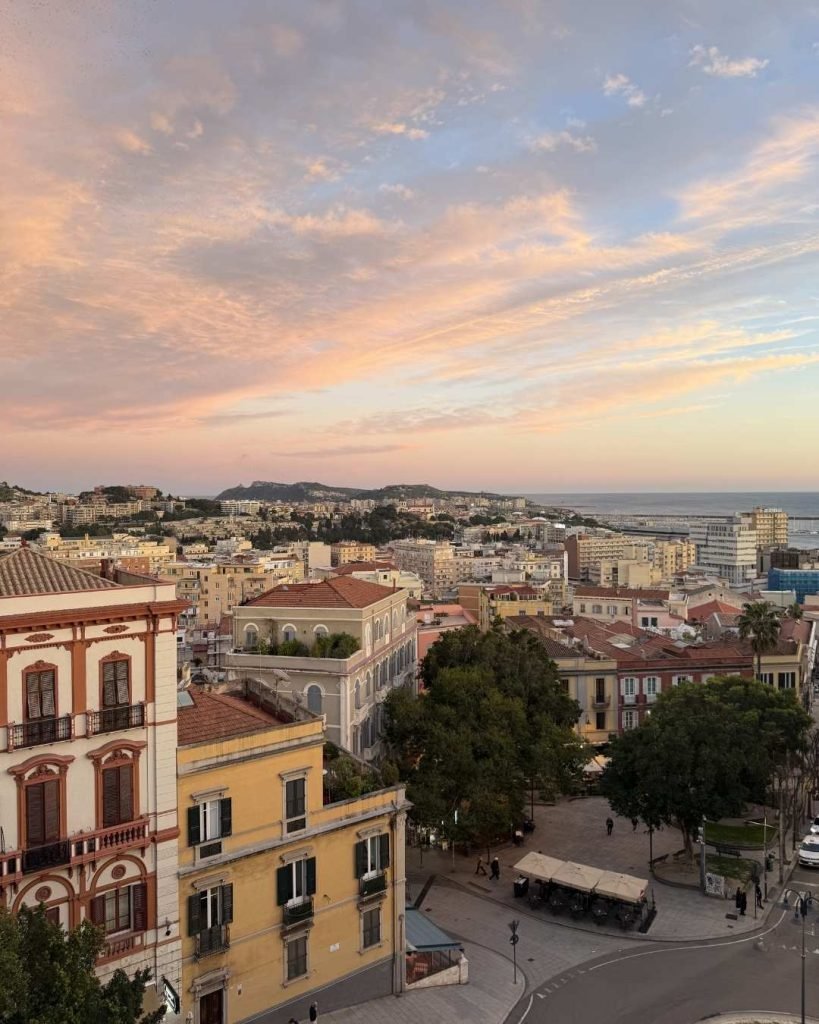
What makes Sardinia work so well as a study abroad destination is that it combines all of this with a functioning, affordable city that takes students seriously. Cagliari is built on seven hills overlooking the sea, with a historic centre called Castello at the top and a sprawling modern city below. The university has been part of the city’s identity since the 17th century. Students are not visitors here; they are part of the fabric of the place.
Choosing to study abroad in Sardinia is also a deliberate move on a CV. It signals curiosity, independence, and a willingness to step off the obvious path. Most employers have never met anyone who spent a semester at UNICA. That is not a disadvantage!
About UNICA – the University of Cagliari
The University of Cagliari was founded in 1620, making it one of Italy’s oldest institutions. It is a public state university with around 25,000 students, and it has been welcoming international exchange students for decades through its dedicated International Students Mobility Office, known as ISMOKA.
For exchange students, ISMOKA is your main point of contact at UNICA. They handle enrolment, learning agreements, course registration, and any academic issues that come up during your stay. ISMOKA’s Incoming Students Desk can be reached at incoming@unica.it.
What you can study
UNICA offers English-taught modules across a range of fields. You can take up to six courses per semester as an exchange student (max 36 ECTS).
Here is the full list of study fields:
| Bachelor | Master |
| Business and Economics | Management |
| Languages and Cultures for Linguistics | Sustainable Tourism Management and Monitoring |
| Mediation | International Relations |
| Languages and Communication | Economics, Finance and Public Policy |
| Law | |
| Pharmaceutical Chemistry and Technology | |
| Pharmacy | |
| Neuropsychobiology | |
| Chemical and Biotechnical Process Engineering | |
| Electronic Engineering | |
| Computer Engineering, Cybersecurity and Artificial Intelligence | |
| Electrical Engineering | |
| Internet Engineering | |
| Environmental and Land Engineering | |
| Computer Science | |
| Physics | |
| Modern European and American Languages and Literatures | |
| Texts Translation |
You can select your modules once your placement is confirmed. Your Asia Exchange coordinator will guide you through this and help you set up the learning agreement with both universities.
On learning agreements: your learning agreement is the formal document listing the courses you plan to take at UNICA and how they map to your degree at home. It needs to be signed by you and your home university before you enrol. If you need to change a course after arriving, always coordinate through Asia Exchange first. Unannounced changes can create transcript issues down the line.
Life in Cagliari
Cagliari is not a city that takes long to feel like home. It is compact enough to navigate on foot or by bike, lively enough to keep you occupied any evening of the week, and affordable enough that a student budget genuinely goes a long way. The local markets, the evening passeggiata through the old town, the aperitivo culture: these are the rhythms of daily life here, and you will fall into them quickly.
The beach, the flamingos, and what is right outside the city
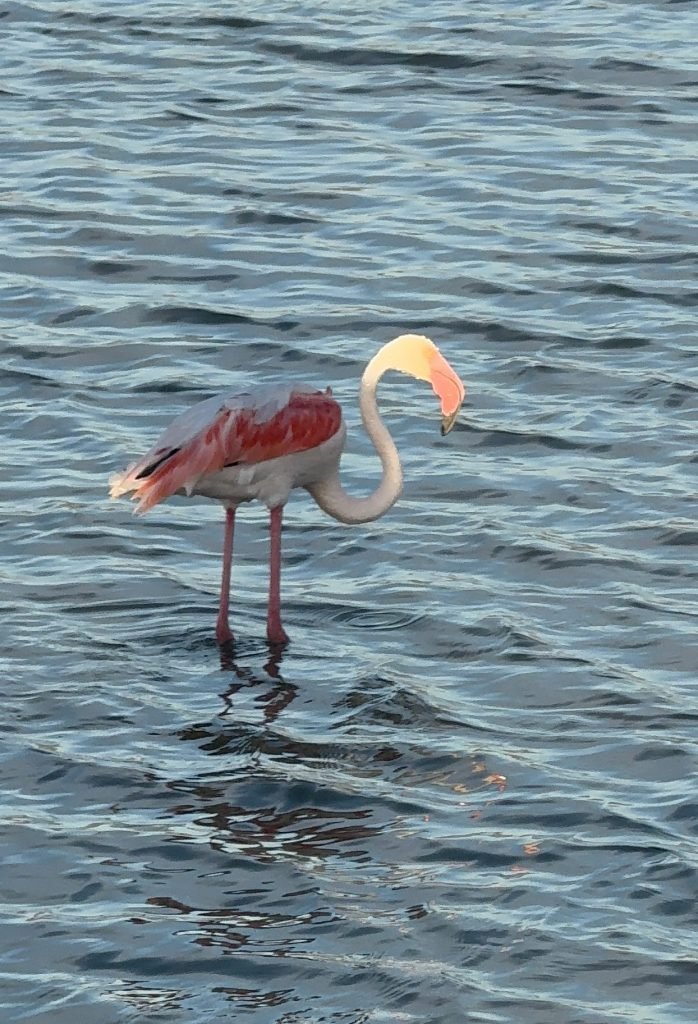
Poetto is Cagliari’s beach, eight kilometres of sand that the city bus gets you to in under twenty minutes. From spring through autumn it is where students go after lectures, on weekends, and on any warm afternoon that seems too good to waste. Right next to Poetto are the Molentargius wetlands, a nature reserve where pink flamingos live year-round. You can walk from the beach to the reserve and watch hundreds of them feeding in the shallows. It is surreal the first time you do it, and it never really stops being surreal.
On the edge of Cagliari, the headland called Sella del Diavolo (the Devil’s Saddle) offers one of the best short hikes near any university city in Europe. The trail takes you up above the bay with views over Poetto, the city, and the open sea. It is accessible from the city without a car and takes about an hour to reach the top. The Roman amphitheatre carved into the rock in the city centre is worth a visit. So is the Bastione di Saint Remy in the Castello district, which gives you the best sunset view in the city.
Weekends: the rest of the island is yours
Sardinia rewards students who are curious enough to explore beyond Cagliari. Most of the best places are within an hour or two by car. Renting one for a weekend with a group of friends is affordable and the obvious way to get around.
The Sette Fratelli Regional Park sits about 30 to 40 minutes from Cagliari and is one of the best hiking areas in southern Sardinia. Trails wind through granite peaks, Mediterranean forest, and past ancient nuragic towers. The highest point reaches over 1,000 metres. It is also one of the few places you can spot the native Sardinian deer in the wild. The WWF oasis at Monte Arcosu, even closer to the city, is another good option for a half-day hike through cork oak forest.
Chia, about an hour south of Cagliari, is consistently listed among the most beautiful stretches of coastline in Europe. Dunes, clear shallow water, and the ancient ruins of Nora nearby. Villasimius, to the east, is a popular base for snorkelling and boat trips. Neither feels crowded outside of peak summer. Both are the kind of places you will end up returning to more than once during your semester.
Further afield, the interior of the island opens up into a completely different Sardinia: mountain villages, prehistoric Nuragic sites, and a landscape that most people who visit the island never get to see. A weekend in the Barbagia region or along the Gulf of Orosei tends to become the highlight of a semester in retrospect.
Accommodation
Most students find private rooms or shared apartments in neighbourhoods close to the university campus (in Cagliari for most courses, or in Monserrato for medicine students). Popular areas among international students include the old city centre, San Benedetto, Quartiere Castello, Stampace, and Marina, all with a lively atmosphere and easy access to campus. Finding a good place is very doable, especially if you start looking a few months before you arrive.
Here are the platforms former students and Asia Exchange recommend for finding accommodation in Cagliari:
- Stanza Semplice: recommended by former UNICA students, good selection of rooms across the city
- HousingAnywhere: verified listings with no in-person viewing required, useful if you are searching from abroad
- Idealista: large selection of rooms and shared flats, updated regularly
- Erasmusplay: student-focused listings specifically across Cagliari
- Airbnb: a practical option for a short-term stay on arrival while you look for something longer-term
How to apply for a semester abroad in Sardinia
- Choose your semester: UNICA offers autumn and spring semesters. The spring 2027 deadline is 29 January 2027, and the autumn one is 31 August 2027.
- Apply through Asia Exchange: The online application takes around 15 minutes. You will need your home university enrolment confirmation and academic transcripts. Placements can be confirmed in as little as one day!
- Set up your learning agreement: Work with your home university to agree which UNICA courses count towards your degree. Your Asia Exchange coordinator liaises with both sides to make the process smooth.
- Sort the practical details: Asia Exchange coordinates your UNICA enrolment, accommodation search support, and pre-departure orientation. You arrive knowing what to expect.
When to apply: Asia Exchange accepts applications on a rolling basis, but earlier is always better. Three to four months before your intended start date gives you the most flexibility on course selection and accommodation.
Ready to spend a semester in Sardinia? Explore Asia Exchange programs at the University of Cagliari.
The post Study abroad in Sardinia: your complete UNICA guide appeared first on Asia Exchange.
Article source: https://asiaexchange.org/blogs/study-abroad-in-sardinia-unica-guide/